
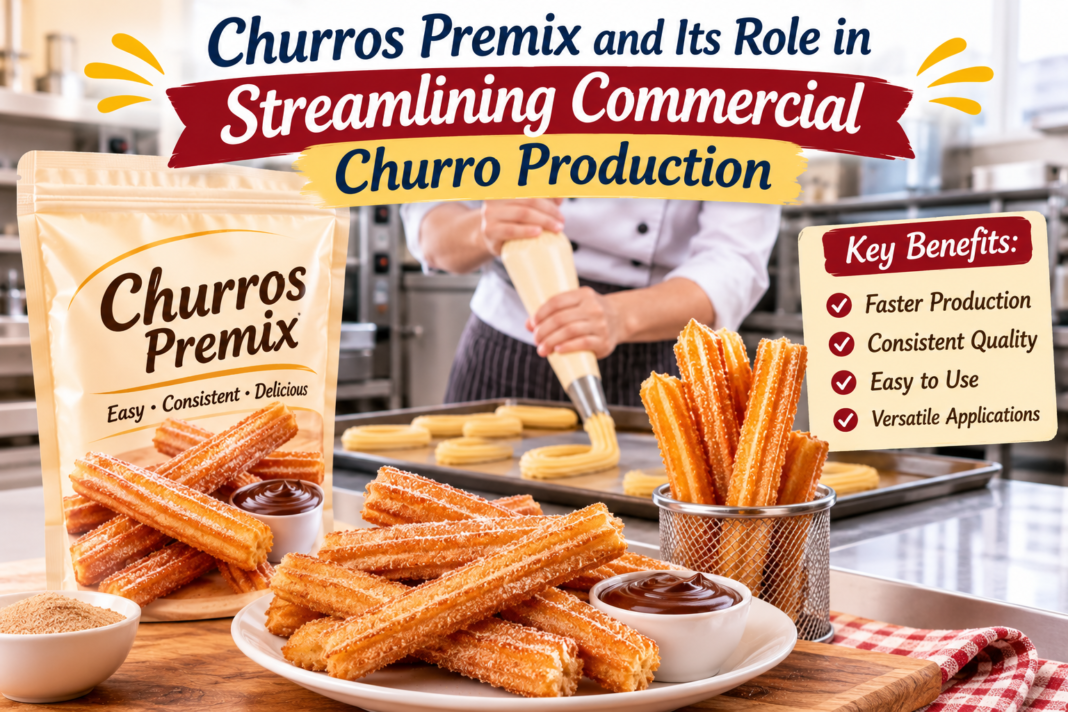


Churros are a popular item on many desserts menus. These fried pastries are traditionally known for being part of Spanish food. They consist of a light crispy golden pastry with a soft chewy centre. Churros are often served with sugar, cinnamon or a chocolate sauce, making them ideal desserts for dessert stations, takeaways and fresh snacks.
Creating churros consistently in a professional kitchen can be difficult. It can be hard to ensure the consistency of the paste and ensure they are piped correctly and fried to the right texture. A churros premix can make it easier to create churros by having a specially formulated dough.
Knowledge of how to make churros, what affects the final product and how to incorporate them into your menu can help you plan your production.
Understanding Churros and Their Traditional Preparation
Churros are traditionally made by deep frying long strands of choux pastry. This creates the signature crispy shell and soft chewy centre.
The churro pastry is usually put into a piping bag with a star tip, this is then piped into hot oil. Once cut to size it is fried. It is common to then dust with sugar or cinnamon sugar.
The consistency of the churro pastry and the temperature of the oil will determine how good they turn out. The consistency of the churro pastry needs to be correct when piped through the tip. The oil temperature will impact how coloured they are, how long they take to cook and what the centre will be like. In a commercial setting the churros may not come out the same due to the variations between batches.
Using the traditional method means that they will have to measure everything more than once. Having a basic recipe that can be replicated will help the team create churros with the same shape and texture throughout the day.
The star tip will create the distinctive ridges. The churros will have a definite shape to them. The staff should ensure that they are pressing the same amount of pressure and cutting the same sized portions to ensure they all cook at the same rate.
How Churros Premix Simplifies Commercial Preparation
Making the churros dough can be a time consuming process due to the measurements needed and the mixing. You can also get inconsistencies with it by having to make it multiple times throughout the day.
The premix contains the ingredients needed to make the churros. Depending on the recipe, some mixing may be involved with the boiling water added. This means fewer ingredients are being measured by the staff, making it easier to standardize the process.
This has many practical benefits:
- Fewer ingredients to measure
- Easy to manage
- Less inconsistencies when making batches by following instructions
- Can help with the frying if the correct recipe is used with the right texture, colour and frying characteristics
- Staff can spend more time piping, frying and finishing.
However, a premix does not mean you can ignore the techniques. The amount of water, mixing, piping and frying should all be done according to the instructions in the recipe.
Achieving the Right Texture, Colour and Frying Performance
- The churros should have a crispy outer crust and soft chewy centre. This will depend on the dough and frying.
- Dough consistency – You should be able to pipe the dough. If the dough isn’t the right consistency, it could cause issues when piping. This can be due to incorrect quantities of water or insufficient mixing.
- Oil temperature – If the oil is too hot, then the outside will cook and brown too quickly leaving an undercooked centre. If the oil isn’t hot enough, it can cause the churros to absorb more oil.
- Cooking time – The churros will need enough cooking time so they are fully cooked and golden. Think about how thick and long you are making them.
- Oil care – By keeping an eye on the oil and using correct frying techniques, the quality of your churros can be maintained throughout long cooking times.
Some churro recipes will allow for less oil absorption. However, this will depend on the dough and how it has been prepared and cooked.
Look at the final product. To ensure the centre is cooked, take a sample of the churros. If you are getting different results, look at the dough consistency, portion sizes and oil conditions first.
Incorporating Churros into Commercial Dessert Menus
Churros suit several foodservice formats, from standalone snacks to plated desserts. Cafés can serve them alongside hot beverages, restaurants can include them in dessert platters, and hotels can offer them at buffets or live dessert counters.
Serving formats can be adapted to the menu:
- Classic cinnamon-sugar churros: A traditional option for takeaway and counter service.
- Chocolate-dipped churros: Served with chocolate sauce as individual portions or shared plates.
- Filled churros: Depending on the formulation and method, they can contain chocolate or other dessert creams.
- Mini churros: Smaller portions suit dessert platters, tasting menus and buffets.
Before introducing variations, businesses should test preparation and finishing methods to ensure additional ingredients do not complicate service or affect product quality.
Improving Production Efficiency During Peak Service
Churros should be cooked and served fresh. If you have a high customer flow, then you need to ensure you can cook enough.
Have an idea of how much you will need to cook. Cook in batches that your kitchen can cope with. Don’t cook too much if you’re unsure how long the dough will last. Ensure you have your piping station and cooking station set up to enable staff to move around quickly. Have your coatings, sauces and presentation items ready.
Ensure staff know how much water to use, how to mix, pipe and cook. Having a written method will help to ensure consistency between shifts. If you have many outlets, having a standardised method will help ensure they can make the same product.
Plan your menu to ensure they can be cooked quickly. Consider how much you want to serve and whether there will be sauces or toppings. Keep the base method simple so you can offer variations without having multiple doughs.
Common Mistakes to Avoid When Preparing Churros
Even when using a prepared mix, production mistakes can affect the finished product.
- Incorrect water proportions: Too much or too little water can make piping difficult.
- Inconsistent mixing: Variations can affect dough structure and handling.
- Uncontrolled frying temperature: Fluctuations may cause uneven browning and cooking.
- Uneven portions: Differences in length and thickness can result in different cooking times.
- Poor oil management: Neglecting oil quality and filtration can affect appearance and taste.
- Improper holding: Leaving churros for too long can reduce crispness.
Clear preparation and quality-control procedures help minimise these issues during regular production.
Final Thoughts
Churros can bring a fried dessert to professional bakery and foodservice menus.. Making churros consistently well requires control over dough preparation, piping, frying and finishing. A good churros premix can make ingredient prep easier. It gives a starting point for large-scale production. When paired with frying methods, consistent batches and staff who are trained it helps businesses keep up with service demands. It also helps them keep the crispy exterior and soft inside that customers expect. Professional kitchens should pick a premix formulation. They should also build a process that fits their equipment, service pace and menu needs.