
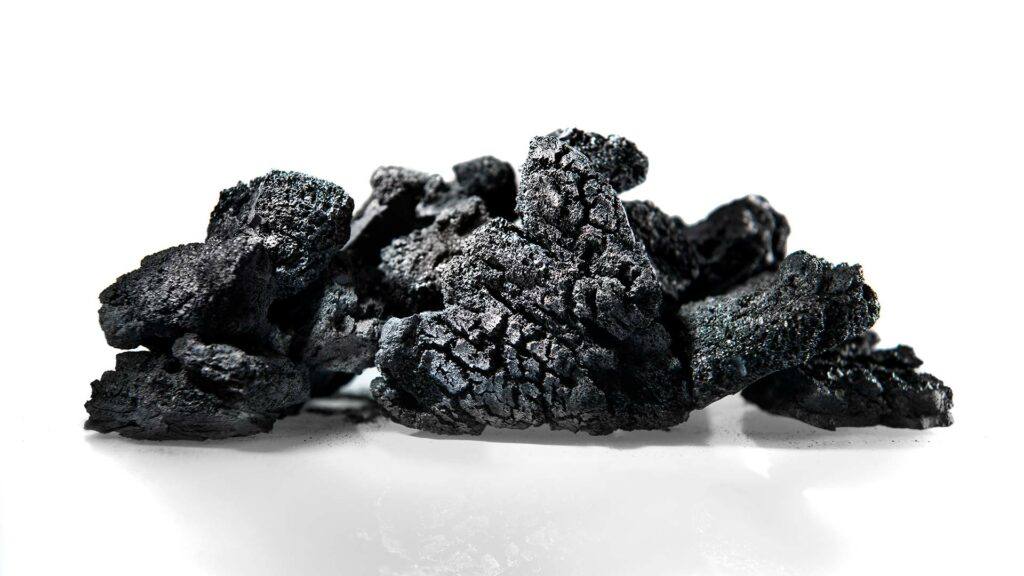


Ink formulation has become a discipline defined by precision, where even small material variations can influence print consistency, durability, and functional output. Advanced carbon materials enable this precision by offering refined control over dispersion, optical density, and stability across printing environments. In premium applications such as platinum carbon black ink, these materials help achieve exacting quality standards while supporting repeatable production and performance reliability.
1. Carbon materials as a foundation for ink performance
Carbon materials function as more than color carriers; they are performance drivers within modern ink systems. Their engineered properties influence how inks behave during formulation, application, and long-term use across diverse substrates.
- Structural contribution to ink behavior:Carbon particles interact directly with binders and solvents, shaping flow characteristics and film formation. This interaction determines how smoothly inks transfer during printing and how evenly they settle on surfaces.
- Balance between strength and flexibility:Advanced carbon materials allow inks to maintain color depth without becoming brittle. This balance supports durability while preserving adhesion on flexible and rigid substrates alike.
- Consistency across production cycles:Engineered material uniformity helps reduce variation between batches, enabling manufacturers to maintain predictable output across large-scale ink production.
2. Particle engineering supporting formulation control
The internal structure and surface design of carbon materials determine how precisely inks can be formulated. Controlled engineering reduces uncertainty and supports fine-tuned performance targets.
- Optimized particle size distribution:Narrow particle size ranges improve dispersion efficiency and reduce the risk of nozzle clogging or uneven application during high-speed printing.
- Surface chemistry alignment:Surface-treated carbon materials improve compatibility with resin systems, ensuring particles remain evenly distributed without separation over time.
- Controlled porosity levels:Balanced porosity supports pigment interaction while preventing excessive solvent absorption that could destabilize ink viscosity.
3. Dispersion stability across the ink lifecycle
Ink quality depends on dispersion stability from mixing to final application. Advanced carbon materials help preserve dispersion integrity under mechanical and environmental stress.
- Reduced sedimentation tendencies:Engineered carbon surfaces improve suspension stability, preventing particles from settling during storage or transport.
- Resistance to shear stress:Stable dispersions maintain uniformity even when exposed to the high shear forces generated by modern printing equipment.
- Extended shelf-life reliability:Consistent dispersion performance reduces the need for reformulation or agitation, supporting operational efficiency.
4. Optical control in high-definition black inks
Visual quality remains a primary performance benchmark in ink design. Advanced carbon materials enable precise optical tuning without sacrificing formulation stability.
- Enhanced light absorption:Engineered carbon structures absorb light efficiently, producing deeper black tones with lower pigment loading.
- Improved edge clarity:Fine dispersion supports sharp line definition, which is critical for text clarity and detailed graphic reproduction.
- Finish customization:Material selection allows ink designers to achieve specific gloss or matte effects without compromising color strength.
5. Functional capabilities in advanced ink systems
Beyond color, carbon materials enable functional properties essential for specialized applications. These capabilities are central to the performance of conductive carbon inks used in technical and industrial environments.
- Reliable conductivity pathways:Carbon networks form consistent conductive channels that support signal transmission without metallic components.
- Substrate adaptability:Functional inks retain conductivity across flexible materials, supporting applications such as sensors and printed electronics.
- Environmental resilience:Advanced carbon formulations maintain performance under bending, temperature changes, and exposure to moisture.
6. Manufacturing efficiency through material consistency
Material predictability directly affects production efficiency and quality assurance. Advanced carbon materials help streamline manufacturing workflows.
- Simplified formulation processes:High-quality materials reduce reliance on dispersing aids and corrective additives.
- Stable rheological performance:Consistent viscosity behavior allows precise control during mixing, pumping, and application.
- Lower production waste:Reduced defects, such as streaking or clogging, help minimize rejected batches and rework.
7. Supporting regulatory and sustainability objectives
Ink manufacturers increasingly align material selection with environmental and regulatory frameworks. Advanced carbon materials help meet these expectations without compromising performance.
- Lower material consumption:High tinting efficiency enables reduced pigment loading, contributing to more resource-efficient formulations.
- Durable print outcomes:Long-lasting ink performance reduces reprinting frequency, lowering material and energy usage.
- Compatibility with evolving standards:Engineered carbon materials support compliance with regional safety and environmental regulations.
8. Market influences shaping carbon-based ink development
Ink innovation reflects broader industry shifts within the carbon black market. Material development continues to adapt to changing demand and application complexity.
- Rising demand for functional printing:Growth in electronics and smart packaging drives innovation in carbon material performance.
- Shift toward customized solutions:Ink manufacturers increasingly seek application-specific materials rather than generalized products.
- Global supply expectations:Consistent material performance supports scalable production across multiple regions and markets.
9. Quality assurance enabled by advanced materials
Quality control begins at the material level. Advanced carbon materials support robust testing and validation processes.
- Predictable performance benchmarks:Uniform material properties allow accurate correlation between laboratory testing and real-world use.
- Reduced formulation drift:Stable materials help maintain performance targets over extended production cycles.
- Improved customer confidence:Reliable quality outcomes strengthen trust between ink suppliers and end users.
10. Material innovation shaping future ink design
As printing applications continue to diversify, advanced carbon materials remain central to progress. Their adaptability supports both innovation and scalability.
- Application-driven development:Material design increasingly responds to specific performance requirements rather than generic standards.
- Scalability across volumes:Advanced materials perform consistently in both niche applications and high-volume manufacturing.
- Long-term innovation alignment:Continuous material refinement supports emerging ink technologies and future performance demands.
Conclusion
Advanced carbon materials play a decisive role in improving quality and control in ink design by enabling precise dispersion, optical consistency, functional performance, and manufacturing efficiency. Their engineered properties allow ink manufacturers to meet rising expectations across both traditional and advanced applications while maintaining reliability throughout the ink lifecycle.
Birla Carbon contributes to this progress through its global expertise in carbon material innovation, application-specific development, and commitment to performance consistency. By delivering advanced carbon solutions aligned with industry needs, the company supports ink manufacturers seeking greater control, quality assurance, and long-term value in an evolving printing landscape.